I want to start by giving you language for something you’re probably already feeling but couldn’t quite name — because trust in long-term recovery is a genuinely different creature from the trust you had in the early days. It’s deeper, more relaxed, more natural. But it’s also more informed by reality. And there are a few different versions of it, so let’s find yours.
The Versions That Don’t Serve You
There’s naive trust — assuming nothing can go wrong, taking sobriety completely for granted, no awareness that relapse is even possible.
There’s complacent trust — “they’re fine now,” ignoring warning signs, believing addiction is simply cured.
And there’s the opposite extreme, fearful trust — still hypervigilant after years of stability, unable to relax even when everything is solid, every small wobble triggering relapse panic. That last one is exhausting, and I’ve lived in it. It looks like care, but it slowly corrodes the relationship from the inside.
The Version We’re Aiming For
Realistic trust. Confidence in their recovery while staying aware that relapse remains possible. Trusting today without taking tomorrow for granted. It’s built on evidence — years of demonstrated, trustworthy behaviour, not promises. And it’s resilient: it can weather a minor wobble without shattering, because it knows the difference between a hard week and a real pattern.
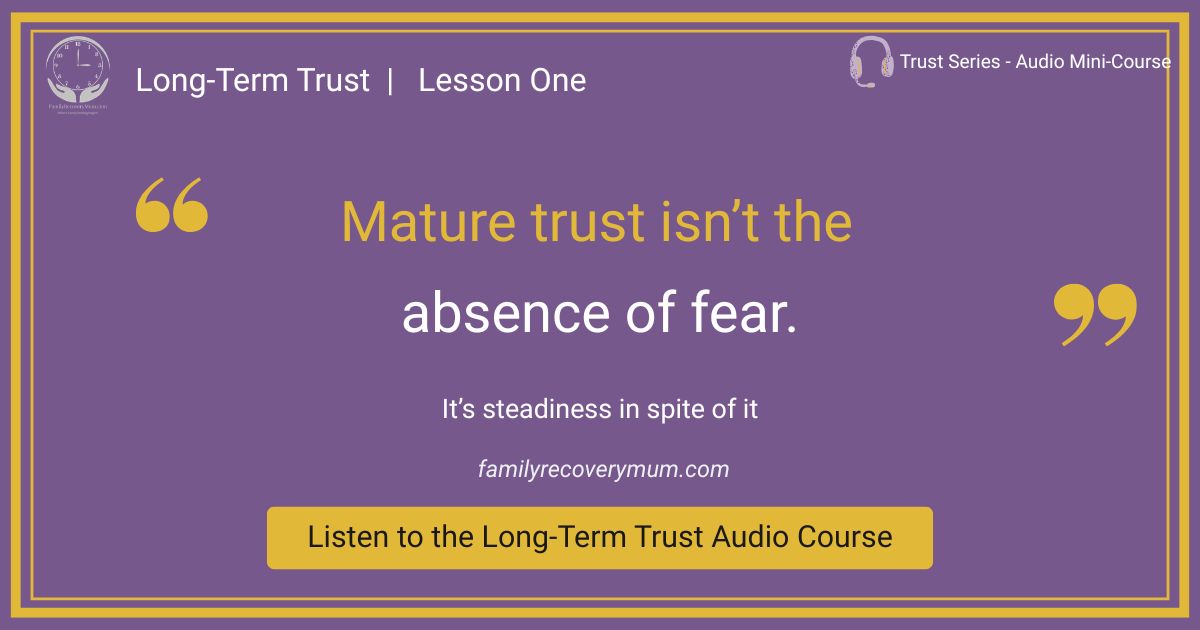
Here’s the heart of it, and it’s the single most useful idea in this whole lesson. Mature trust means holding two truths at the same time. Truth one: I trust them completely. I trust their daily choices, their honesty, their commitment, our relationship. And truth two: addiction is chronic. Relapse is always theoretically possible, recovery needs ongoing care, awareness can never quite go to zero.
People hear those two together and think they contradict. They don’t. “How can you trust her completely and still be aware relapse is possible?” someone once asked me. Because that’s exactly what mature trust is — deep trust AND realistic awareness, living side by side. Awareness without anxiety. That’s the whole art of it.
How to Know Where You Are
A few honest questions. Do you think about their recovery every single day, or only occasionally now? When they’re stressed, does every stressor trigger fear, or are you aware but not panicked? Can you make plans a year or two ahead assuming their stability? Are you emotionally open with them again, with sensible boundaries?
If you’re landing mostly on the calmer answers, you’ve reached mature trust. If you’re still in the watchful answers, that’s okay too — especially if your road included a relapse, where more caution is simply wise.
And a quick word on the five dimensions from Core Trust, because they mature too. Safety and reliability usually become solid — you’re no longer consciously monitoring. Honesty becomes your default assumption rather than something you fact-check. Emotional trust deepens, though some protective walls may stay, and that’s healthy. And future trust grows — you can plan years ahead, while never being a hundred percent certain, because addiction is chronic. Realistic, not naive.
This is Lesson One of Long-Term Trust Maintenance, Part 3 of The Trust Series. Read Lesson Two: Catching Quiet Erosion →
Peer support from lived experience, informed by the principles of CRAFT — not a substitute for professional help.

I’m the founder of Family Recovery Mum, creating practical, compassionate resources for parents and grandparents whose loved one is struggling with addiction. You don’t have to carry it alone — and you matter too.
Faye, Recovery Mum
New here? Start with the First 48 Hours guide or explore the Free Resource Library