Even in the steadiest long-term recovery, there are moments that put it to the test — the big life transitions. And here’s the part that catches families off guard: it’s not only the hard changes that test recovery. The happy ones do too. How someone navigates a transition tells you a great deal about how genuinely stable their recovery has become.
Every Kind of Change Is a Test
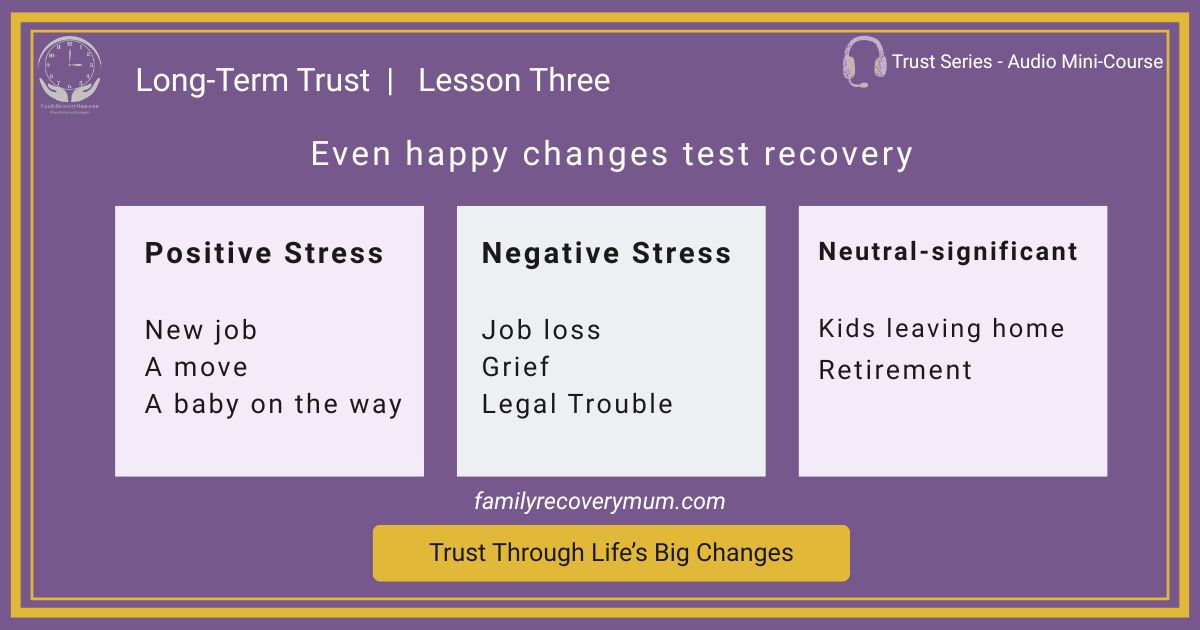
Think of the range. There’s positive stress — a new job, a move, a new relationship, a baby on the way, a promotion. There’s negative stress — job loss, a relationship ending, a health crisis, the death of someone loved, legal trouble. And there’s the neutral-but-significant — children leaving home, retirement, ageing parents, a change of role in the family. Every one of these shifts the ground, and stress, of any flavour, is what recovery has to weather.
Job loss threatens stability, identity, and self-worth all at once, and financial stress was a trigger for many in active addiction. A new relationship can be all-consuming — brain chemistry not unlike a substance — and recovery can quietly get crowded out. A new baby brings exhaustion, identity shift, and broken sleep. Grief is one of the most profound triggers there is, because the wish to numb the pain is so strong. None of these mean relapse is coming — they just mean this is a season to pay a little more attention.
Before, During, and After
So here’s a simple framework for any big change.
Before it arrives, talk about it openly. “This is exciting and stressful. How might it affect your recovery? What support stays in place? What’s the plan if it gets overwhelming?” That conversation alone does so much.
During the transition, lean in a little closer. More frequent check-ins — and say why, so it never feels like suspicion: “Not because I don’t trust you — because big changes are a high-risk season, and I’d rather we walk through it together.” Keep the recovery support active, maybe even increase it for a while. And offer grace for the difficulty, while still holding the accountability.
And after, take a moment to look back. “We’re through it. How did that go? What was hard? What worked? How’s recovery now?” If they navigated something genuinely hard without relapsing, name it out loud — because that’s not a small thing, that’s evidence of how strong their recovery has become. Then let the extra support ease back to normal; it doesn’t need to stay heightened forever.
The Line to Keep in Your Pocket
“More check-ins right now isn’t me doubting you — it’s me knowing this is a tender season, and wanting us to get through it together.”
Closeness offered as support, not surveillance. That’s the whole move.
This is Lesson Three of Long-Term Trust Maintenance, Part 3 of The Trust Series. Read Lesson Two: Catching Quiet Erosion → or Lesson Four: Concern or Normal Life? →
Peer support from lived experience, informed by the principles of CRAFT — not a substitute for professional help.

I’m the founder of Family Recovery Mum, creating practical, compassionate resources for parents and grandparents whose loved one is struggling with addiction. You don’t have to carry it alone — and you matter too.
Faye, Recovery Mum
New here? Start with the First 48 Hours guide or explore the Free Resource Library